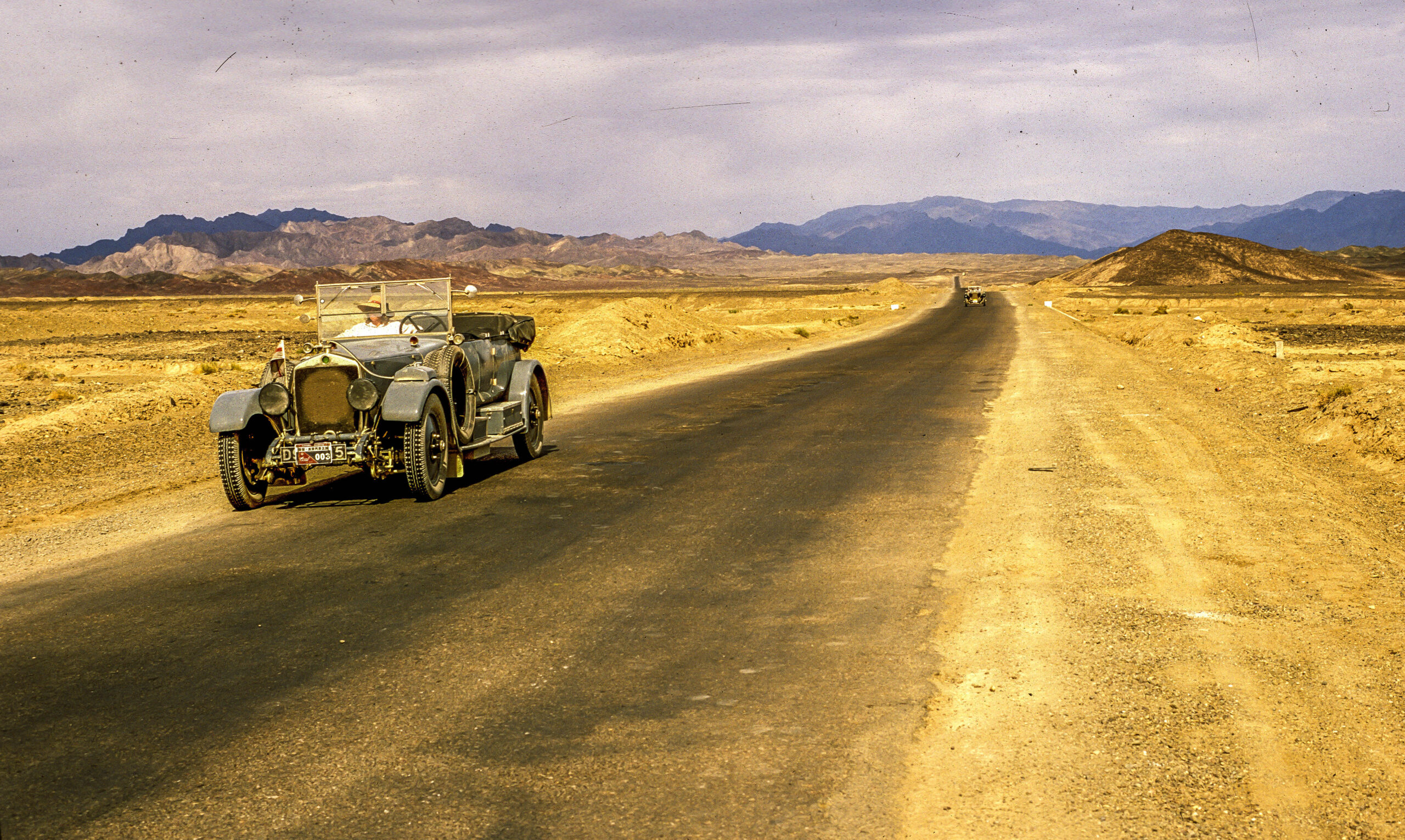
A fragment: Namibia
Our 40 horse Lanchester had performed perfectly so far on the London to Cape Town rally so much so that I wanted to pet it by giving it a full service and complete cleaning before leaving the comfortable Windhoek hotel.
With 9.½ gallons of engine coolant, 4.½ gallons of engine oil, 2 gallons of gearbox oil, 1. ½ gallons of rear axle oil, ½ gallon of oil supplying the P.A.S. pump unit I had had fitted to alleviate the parking effort, and all topped off with 37 gallons of fuel, our 3.¼ ton motor car was a heady cocktail bouncing down the dirt roads of Africa.
We also of course carried about 5 gallons of drinking water; a large enough quantity so that some of it might be useful should the radiator leak. A sufficient quantity of top up oils for the aforementioned mechanical units and we were carrying 25 litres of a fuel additive recommended by Red Line Lubricants. This I had ordered in very well made stainless steel canisters with a brass threaded bung of a type one could carry as air cargo provided the bungs were sealed with wire passed through the appropriate lugs on the bung and tin. I always, when using the additive, put on rubber gloves and poured the additive into a filling tank during refuelling, but not breathing as I did so: the product contained both Benzine & Toluene: known carcinogens. Those discarded canisters were immediately snatched by one of the natives who seem to have nothing better to do than hang around fuel stations all day. To my horror after refueling the car and having it washed the recipient of one of those canisters came back drinking from it a local made beer! But he did it with such panache, I hadn’t the heart to admonish him!
We had broken a wheel, and these on a 40 horse Lanchester are ¼” boiler plate steel discs of 23”diameter: none of your elegant and namby pandy spokes here. The damage had occurred on the dreadful road between Lilongwe in Malawi to Lusaka in Zambia. This had been promoted by the organizers of the rally to be 350 miles of driving hell even for a Land Rover! Somewhere near Juma on the T4 I hit one almighty pothole but by swerving only the rear left wheel took the impact producing an explosion which shocked us. I really though we must have broken the axle or the chassis frame. The road of hard tarmac is cratered across its width for 300 miles and is therefore a much more punishing surface than any neglected dirt variant. A local quantity surveyor we met put the damage down to the lorries bleeding off a few litres of contaminated diesel which was a frequent event. The diesel, he thought, with help from the hot sun dissolved the tar which binds the aggregate and pretty soon a pothole arrived. No doubting that this is a partial view, to help disguise the inevitable corruption that eats away at the quality of all constructions here.
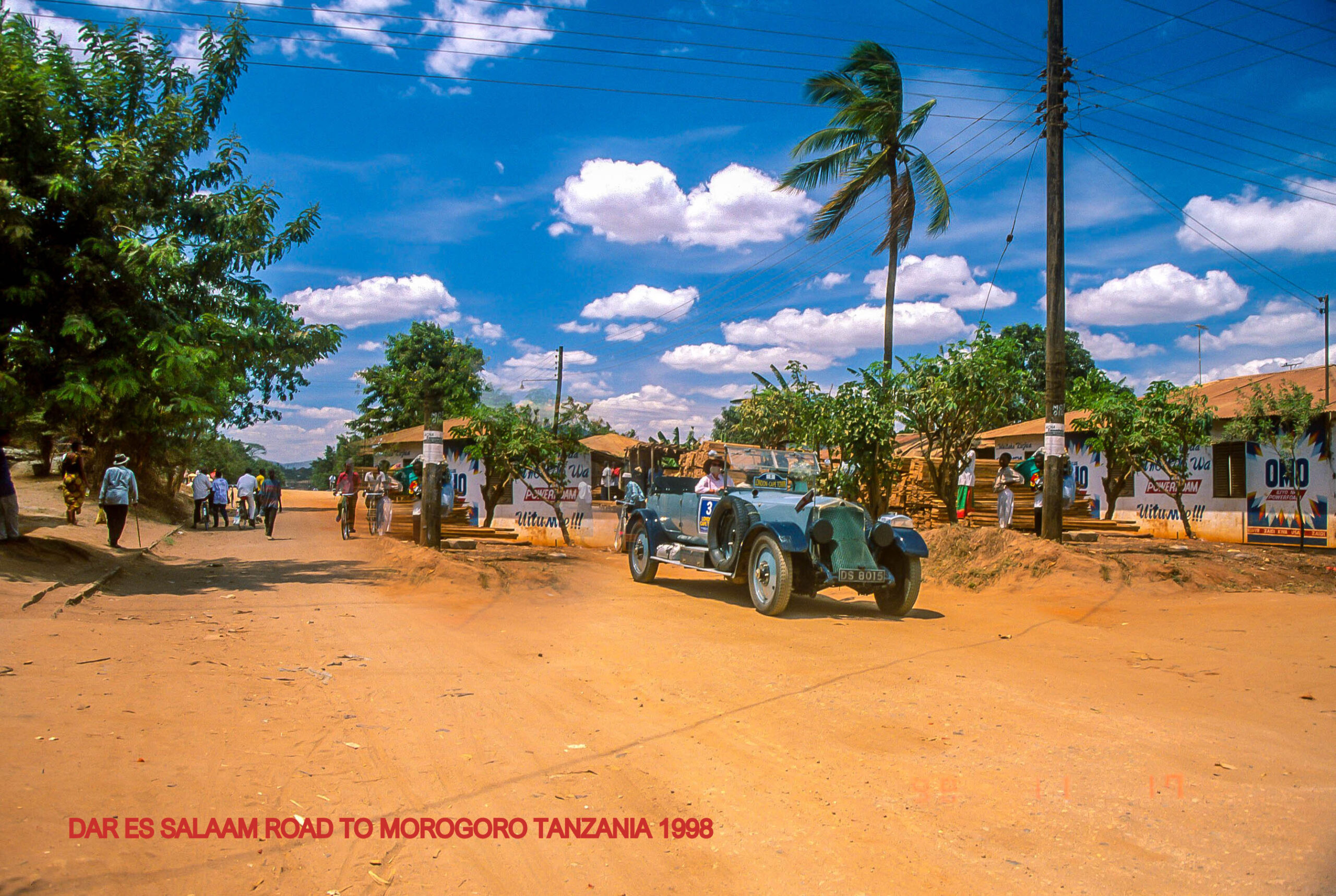
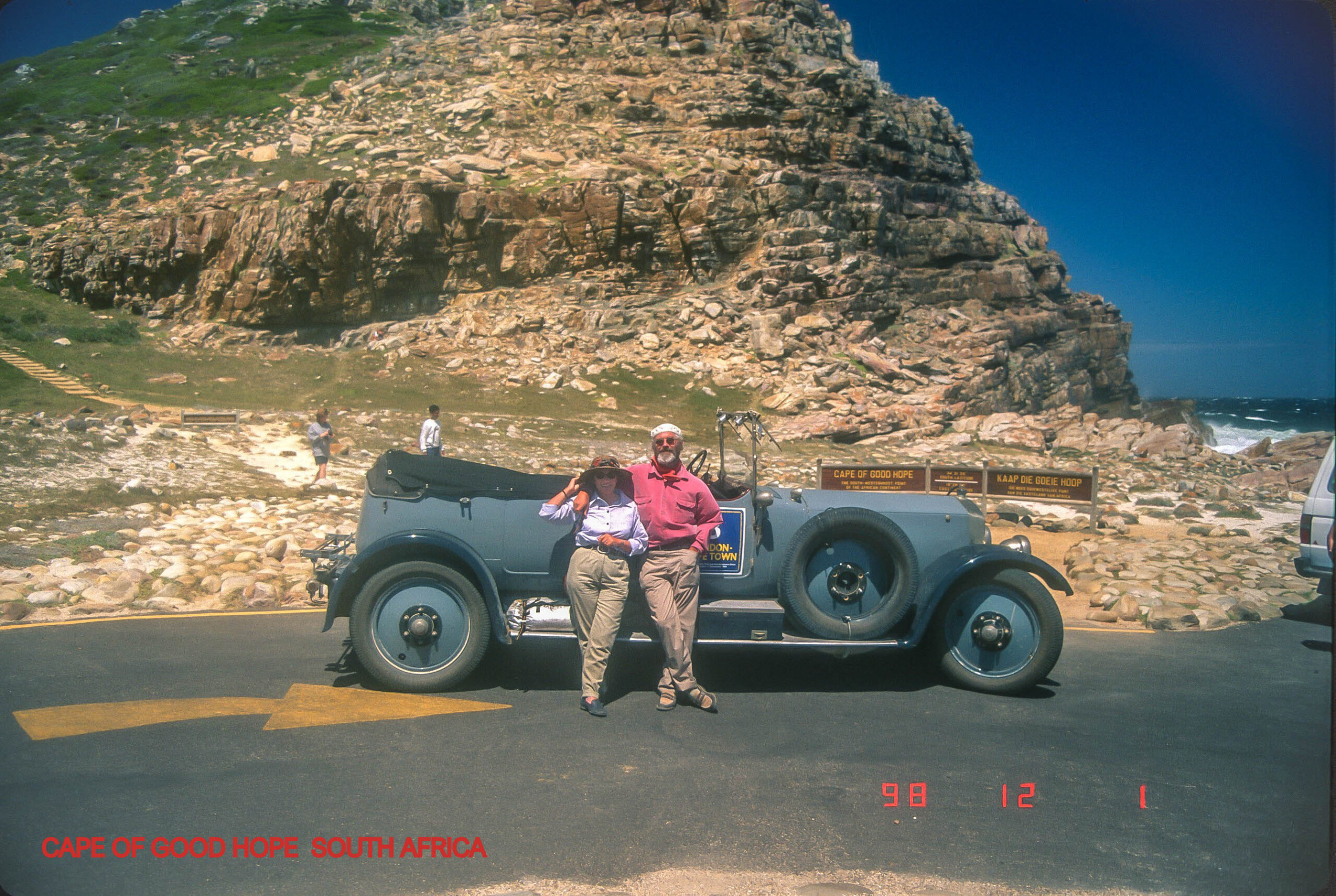
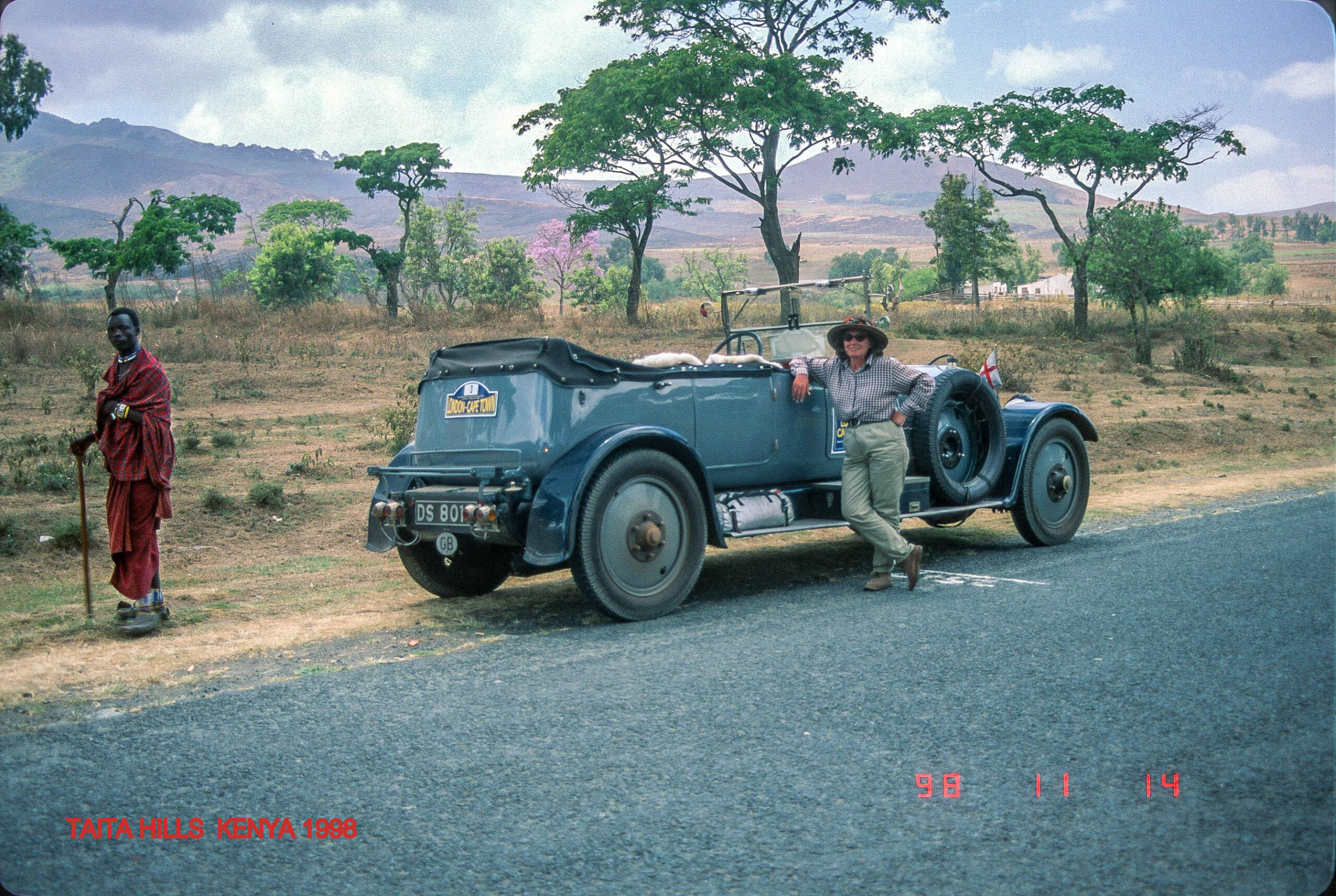
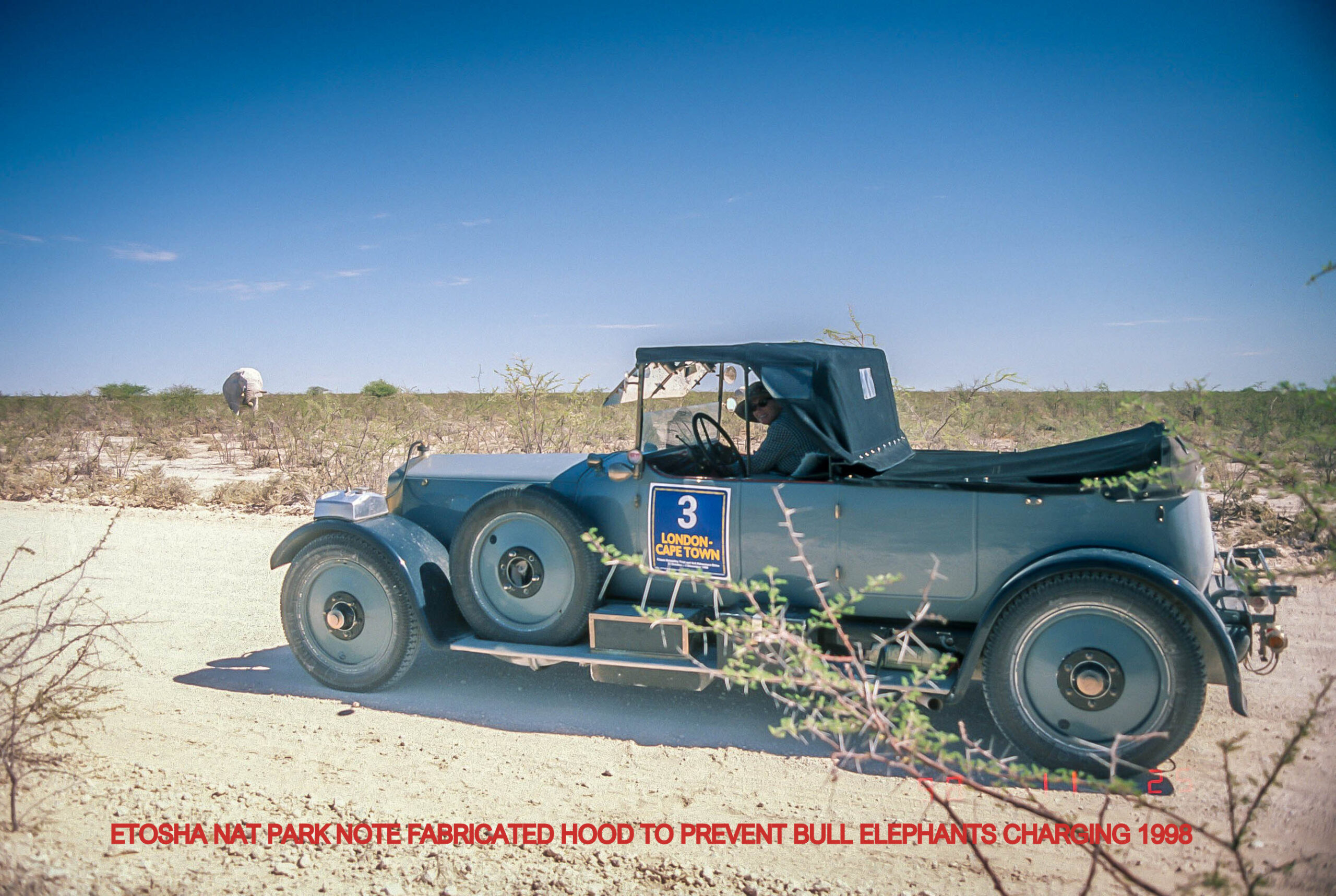
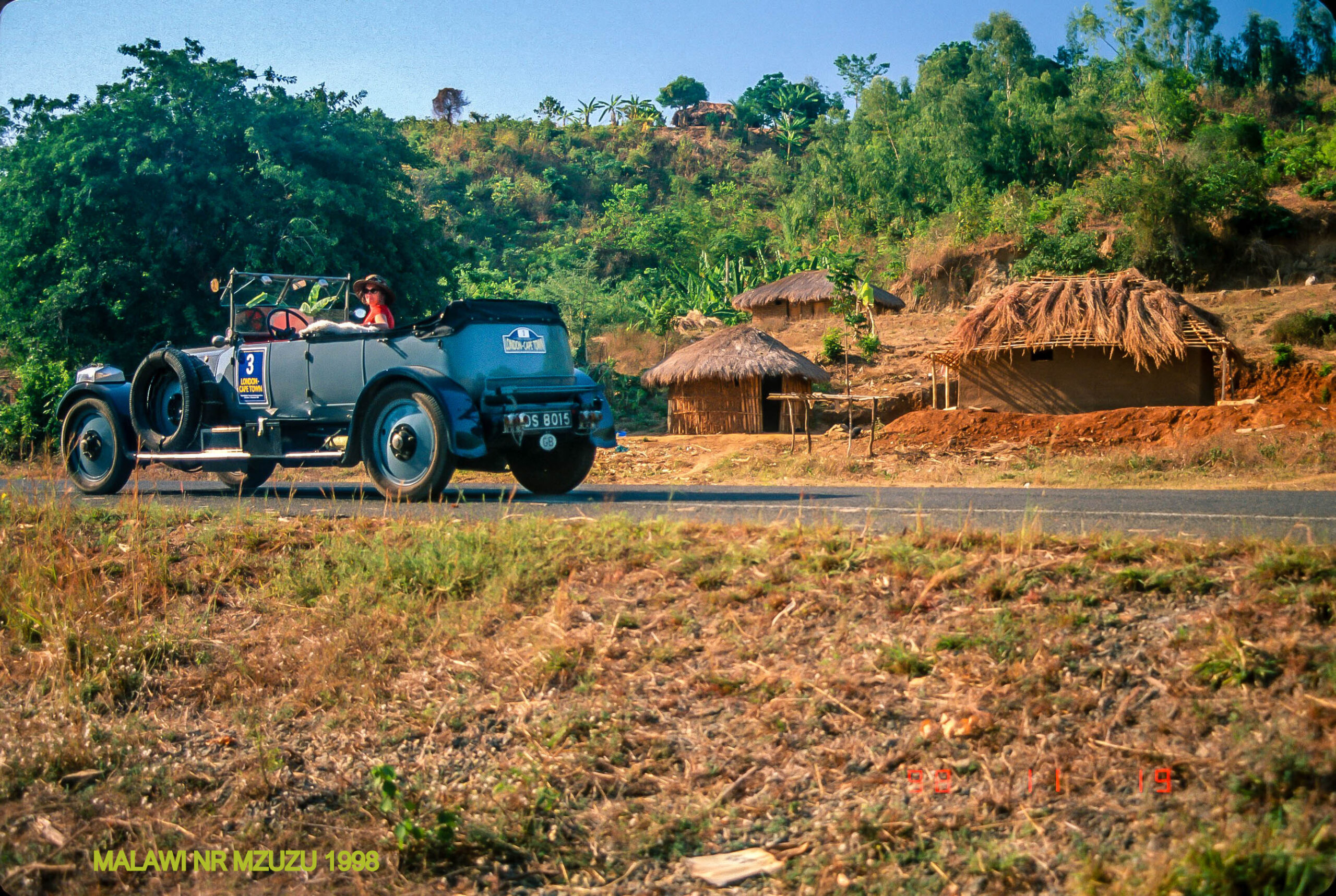
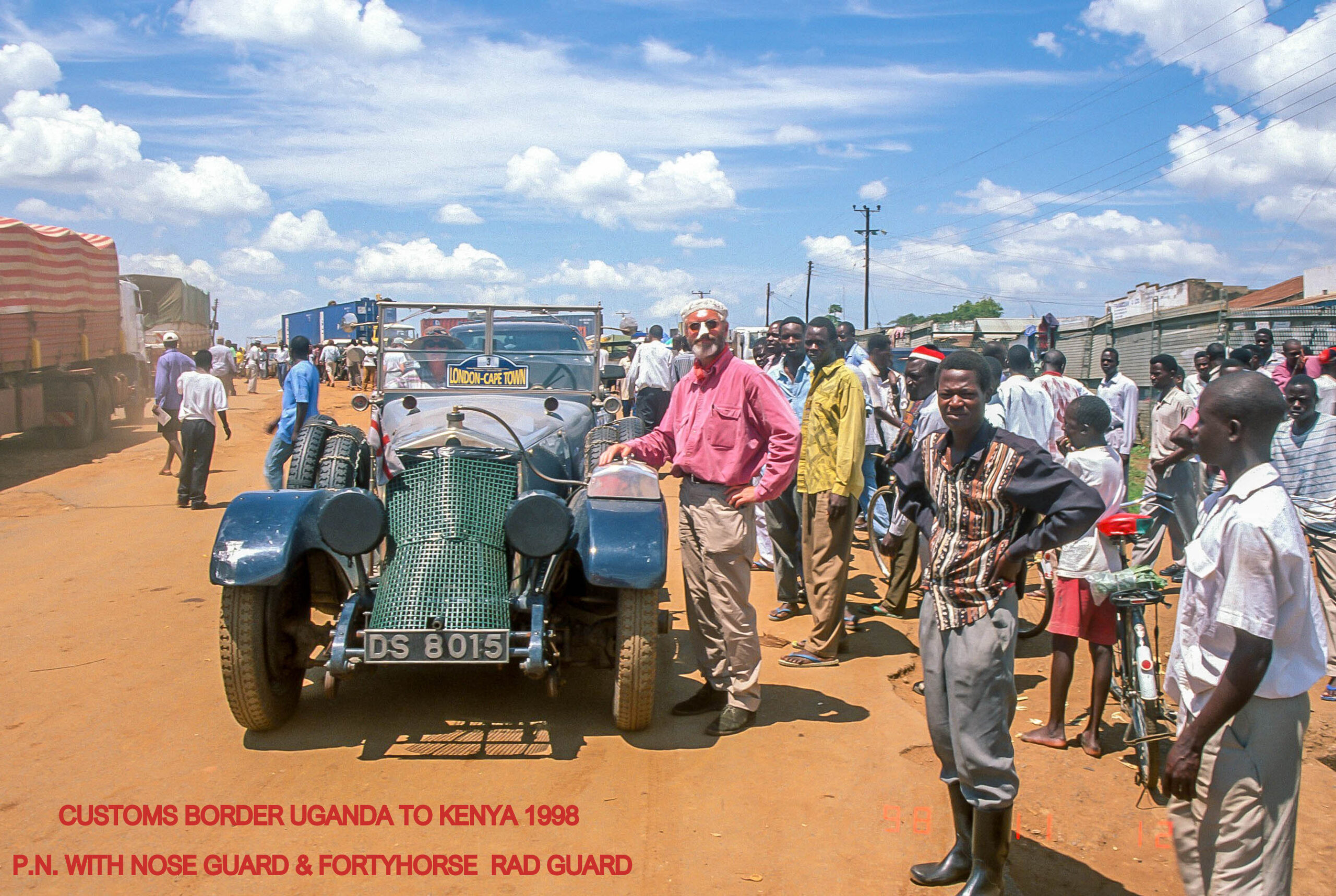
Our damage was a shredded tyre and a tube, a disc wheel with a cheese shape wedge cut into it and a never to be found wheel split rim, a heavy sprung 1”X24”dia. circlip which holds the tyre to the wheel. Once set free on impact, it had scythed its way into the bush only ever to be found, perhaps, by future Chinese prospectors. Thankfully it occurred in the Bush proper where nobody was about. A major Rally accident had occurred in Tanzania involving an American driver and a local girl: that was a dreadful mess and apart from the injury one enters a morass of police and legal niceties!
Sickened by the relentless onslaught of this rally and overcrowding at the hotels we, with Gerry Leuman (4.1/2litre ’27 Bentley) and the Holley’s ( ’47 Cadillac) had broken away and taken our own route and hotels after Lusaka, and they, wanting to see the Skeleton Coast, decided to re-join the Rally at Walvis Bay direct from Windhoek. This they later discussed as being about the worst decision they had taken since joining this Rally.
The accommodation at Walvis Bay had been a hastily erected set of old army marquees each sub-divided into separate quarters by transparent hessian, more suitable for a coconut shy at a country funfair than screening. The wind on that coast is gale-force and with sea currents up from the Antarctic the evenings and nights are miserable.
We, after an additional day of planned stay in Windhoek, intended then to go direct to Canyon Lodge at Fish River, just before the border with South Africa. That journey would be south on dirt for about 400 miles. So on the morning of our day off I removed everything from the car up to the room so that Susie could repack, tidy up the picnic set, the camping equipment and sort out the boxes of maps and rally notes. She also organized the laundry and booked a special meal; marinaded leg of Springbok for the evening meal while I went down to the car to lovingly service it with the sun on my back.
I primed all 52 grease nipples and 22 oil sinks, adjusted the carburettors, re gapped the 12 spark plugs, then leisurely strobed the ignitions, mag and coil, before going out for an engine oil change. That being done I had the car thoroughly washed and at a petrol station about a mile from the hotel filled up with 33 gallons of fuel. As African pump attendants will always fill to the very brim or just beyond it, I was not surprised to smell a heavy petrol vapour on the short return drive.
Back at the hotel car park there was little to do now in preparing the car for the morrow. So I checked the tyre pressures, jacked up each wheel to adjust the brakes but could not get away from that heavy crude smell of petrol which should not have persisted, especially as the ambient temperature was in the high 40s and there was a gentle though persistent westerly wind!
Now I began the search for a petrol leak which must surely be, I thought, either a dirty float valve, a loose banjo bolt on the carbs or a compression joint seeping somewhere on the fuel line, maybe even from the petrol pumps tucked away into the chassis U section at the rear.
And so the bonnet came off as did the tonneau and the tool boxes, the seats came out, the carpets were removed and the floor boarding came up too: also the below floor spares tray, 3 foot square 7”deep, came out with lots of helpful cursing, but there was no sign of a leak anywhere. Yet the smell persisted and was getting stronger rather than fainter as would be expected without the engine running or the car moving.
Lanchester had fitted a 20 gallon tank between the chassis rails at the rear and for the export model, and ours was 1of 7 left hand drive cars made, an additional 10 gallon reserve tank was fitted behind the rear seat cushion within the bodywork leaving the luggage rack free for cases. To operate this tank one simply turned a lever in front of the rear seat kick board which operated a gate valve and the contents drained into the main tank without recourse to a pump: simplicity. To enable us to drive the 400 miles between petrol stops as demanded by rallies in Central Asia I had had a larger reserve tank made and fitted with an increase to 17 gallons.
Checking the auxiliary tank by pulling the rear seat cushion forward I immediately saw in the dark cavern below a mirror image of my own face and the blue sky! This auxiliary tank being taller than the original had been unable to take the torsional stresses caused by the flexing of the chassis: perhaps the result of that potholed road to Lusaka! The soldered and riveted internal baffles, placed there to stop the sloshing effect on cornering, had pulled through. Petrol was coursing down the tank walls and gathering to form a puddle inside the body behind the rear seat.
The obvious solution was to drain the tank but we needed its extra capacity and buying loose jerry cans of 20 Ltrs was not a solution as they are a serious liability on bumpy roads besides there was no room for four of these as we always travelled with too much luggage, too many spares, and far too many tools. But I had to act swiftly: this was an incendiary about to explode.
What to do? One thing was certain we could not leave the car parked overnight as the friendly, if not eager, onlookers who, all avid smokers made me greatly fear a fire. Telling them to keep back or put their cigarettes out was not working and so I reassembled the car and rushed across to reception explaining my predicament and requesting a security man to keep the smokers well back while I ran upstairs to collect Susie, delegating to her to pack our luggage, to cancel the much desired evening meal, to find the unwashed laundry and make a booking at the nearest hotel going south which would be in Keetmanshoop 360 miles away.
We pulled out of the hotel car park at 15.15 hrs. with the intention of burning off the fuel in the auxiliary tank and evaporating that little pond of petrol that was sloshing around in the back of the bodywork.
Now began one of the greatest drives of our lives.
Pretty soon the black-top tarmac road ceased as we came to the outskirts of town and a fairly smooth but dusty white chalk desert road ran out before us south. This was going to be, at first glimpse, a long and anxious drive. We took some comfort from the proprietor at Keetmanshoop, when he had said our chances on the road were fair, as, “we still had all kinds of daylight left”: more comforting was that the hotel would accept us even past midnight.
It was still hot and after the initial climb out of Windhoek the road continued to climb more gently for the next 150 miles but after about 70 miles a really powerful headwind assaulted us and for anybody familiar with the architecture of the Lanchester 40 h p tourer they will know that it has a lot in common by design with that fragment of the Berlin Wall: its upright flat windscreen, 22×50”is a great comfort for the driver and passenger, but acts as an air dam, as does the massive flat faced radiator, the 10”dia. headlamps etc.. My foot was flat on the floor for the entire journey varying in speed between 50 and 53 mph. Meanwhile the petrol fumes had given us both a headache and though we had a headwind this only served to produce more of a low pressure area behind the screen and dashboard whereupon the petrol vapours were sucked forward from under the tonneau cover and then straight up in front of our faces: any little blue spark now might produce a magnificent film clip for any of those modern American film makers who can think of no other dramatic gesture than cars somersaulting in at speed engulfed in flames!
So the top sections of the front screens were opened, the tonneau removed and the back seat cushion held forward with 2 bungee cords: fresh African evening air now cleared our heads but the headwind was even more of a serious handicap to our speed.
Presently we came upon a plume of thick dust; it was from a lorry in the far distance going south as we were. It took a while but we finally caught him up on the top of the escarpment where the heavy hard sand and rock road surface reduced the dust down to almost tarmac standards. After following for a little while I now put my accelerator fully to overtake, but as soon as I was out of the slip-stream it seemed as if the hand brake had been fully applied: we were hitting that headwind again and just did not have sufficient power to pass what turned out to be a 3-trailer-road-train. We could only follow now and probably all the way to Mariental, the only town on that road.
By dropping back and then pulling forward in the road trains wake we adjusted our distance to a point where the buffeting was minimal and where there was hardly any need to use the full power of the engine but we ate dust as never before. We did now though have the chance to relax and enjoy the desert on both sides of the road, watching the big predator birds perched on the old telegraph poles or the occasional antelope herd.
Susie closed her front screen first and then I closed mine with the realization and relief that the petrol vapours had stopped: the little petrol pond had evaporated and the auxiliary tanks contents had been consumed, and so with our anxieties gone about a fire or explosion or major migraine from our own petrol additives we could watch the giant shadow of our truly heroic car being cast onto the white sandy desert to our left.
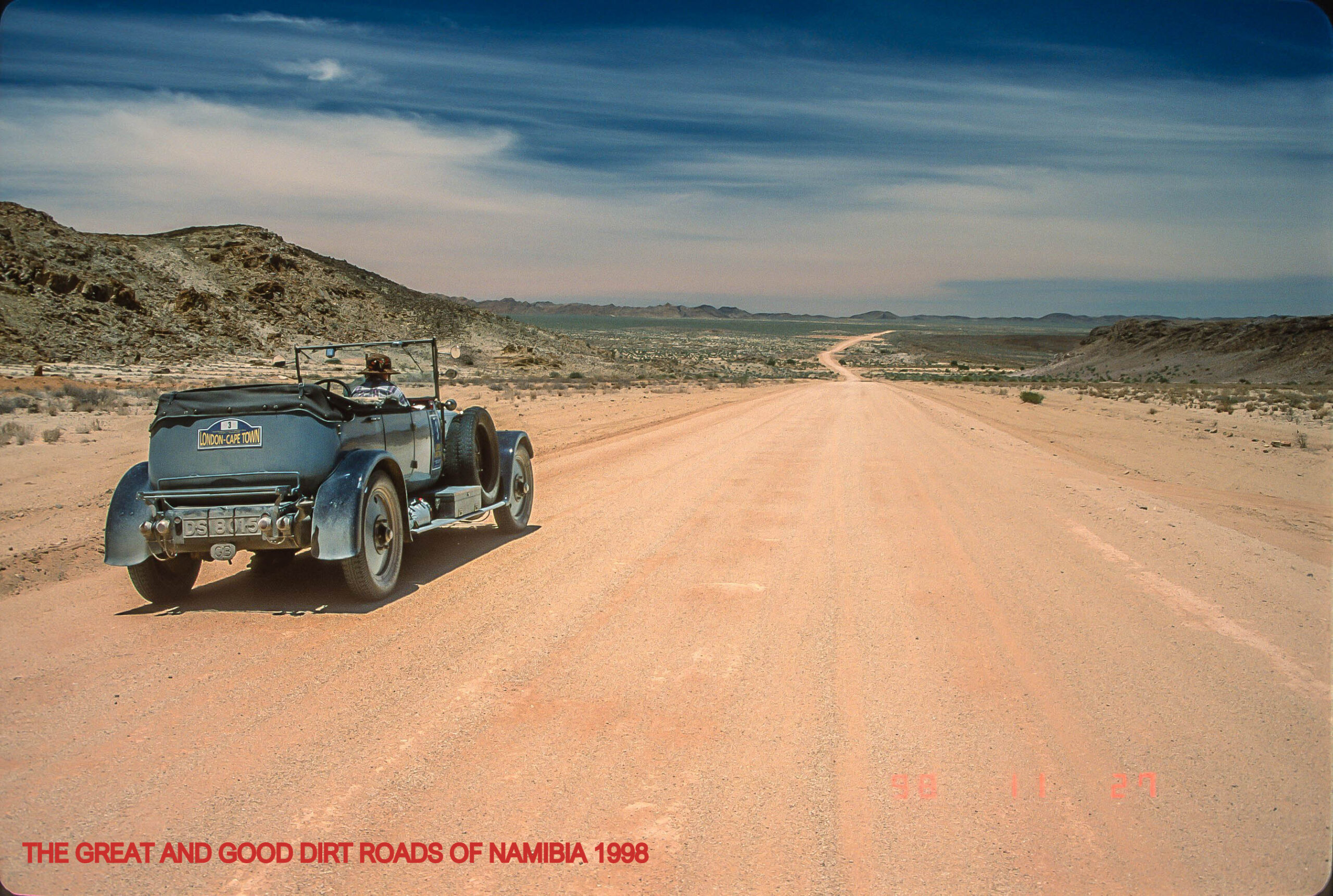
We were probably only about 150 miles from the Atlantic coast of Africa to our right and a similar distance from the Kalahari Desert to our left. The twilight was perpetually lingering as the sun setting over the Atlantic was unhindered by mountain or cloud. Presently though, the lorry driver, who must have been aware by the shadows, that we had been following him, started flashing his indicators, his stop lamps and then his green overtaking lamp as he was pulling off onto the hard of the desert for the night. As we passed a deafening horn blast accompanied by the drivers burly arm waved us farewell: we now felt very lonely as nothing else either coming or going had been seen on that road.
We had been cautioned not to drive in Africa by night principally on account of the poor roads but also large animals came out from the bush suddenly and hitting one would be very messy and dangerous: though unsaid the human menace was probably more real.
The long lingering twilight had now passed and dusk had descended at Mariental where on checking the fuel I found we only had about 3 gallons, perhaps enough for only 15 miles at the current rate of consumption and seepage. The Lanchesters best ever 11.75 MPG would mean we could easily make the next 180 mile leg comfortably on just the main tank. But those head winds were confirmed to persist by the garagiste and the road would be rougher with hill country to pass so both tanks were again replenished restarting the noxious odour and our fears of a fire.
Mariental is a 1 horse burg with a paved central crossroads, a garage, a drug store and some shanty accommodations completed by a rusty tin church. Namibia is one of the last refuges for a natural night without light pollution and on leaving we were plunged into a solid black moonless night: we presumed this to be one, “of the all kinds of daylight left” promised from Keetmanshoop!.
So important was the knowledge of a full moon for travellers that in the 18th century time pieces showing the aging of the moon were a fashionable gadget. We now would appreciate their concerns.
The headlamps, Marchal 8” twin reflector sealed lens units, from a Ferrari Superfast grafted neatly into the original Lanchester lamps were superb. Utilising both dipped and head beams simultaneously 400 Watts of light tamed the desert road for miles ahead. Occasionally we saw wildlife scurrying across in front of us but our enthusiasm was not now for a safari as it had been on previous days: now it was on how soon to get there intact.
“Oh you will find us easily”had said the manager to Susie, “as you drop down from the hills you will see green street lamps, a petrol station and about a mile up on the left you will see us with a gateway made from fossilised trees.” Well that sounded easy enough, but green street lamps? This and many other thoughts kept replaying on my mind mile by interminable mile.
In all respects the 40 horse was purring along beautifully accepting the rough lorry defiled road surface like a thoroughbred shire horse: had I known then, what I found out a week later in Cape Town, that both front axle springs were broken, I should have arrived at the hotel in a state of complete nervous breakdown. But ignorance IS bliss and as it was the next 180 miles, each of which trudged away apparently even more slowly than the last, was, in hindsight, a marvellous drive.
The headwind finally gave way at about 2300hrs and with the petrol vapours gone for the second time we bucked up enormously and clearing a crest in the hills there below was a glow from those eerie green lights promising of Keetmanshoop.
The garage was still open so I filled only the main tank and reconfirmed the hotels whereabouts: all was well. Those green street lamps make an African into a fiendish apparition with only the whites of his eyes and his powerful teeth flashing in dark space: I was apprehensive when they jumped onto the running boards to help show the way. I would have no help and drove off without collecting my change!
Turning in at the fossilised trees gateway and parking in front of the tiered steps leading to the reception I realised just how tired I was when a young uniformed black girl came out onto the steps and staring at us clapped her hands over her face and let out a giggling shriek whilst disappearing back through the double doors. “Fucking cheek” I roared, “Where’s the bloody porters. Do they think I’m going to drive this crate 360 miles nonstop and carry my own luggage? Lazy bastards!” Whereupon the entire staff headed by the manager came out onto the steps and started singing, dancing and clapping a welcome as only Africans can make! In bewilderment I wiped the dust from my lenses and felt a touch heroic for a moment: quite emotional really at that point of exhaustion.
The luggage was unpacked and swiftly taken to the room. Susie was virtually carried shoulder high and I placed the 40 horse in a lockable barbed wire cage for the night, one of a block of 6 though only our car was so protected. I fairly caressed its lovely headlamps for seeing us through such a tough night’s journey: there not being the faintest whiff of petrol about the car now.
The Swiss Serbo-Croat manager had posted the young girl to keep a watch for our arrival and was amazed at our appearance being covered from head to foot, from rad to tail pipe, in white chalk, “Why don’t you have a roof?”he asked. Why, Indeed?. He had the biggest steaks ready, the coldest beer and deep apple pie and custard. Life was really worth living, again. That long, bleak, dusty, lonely, rutted road was suddenly a vanishing memory.
A quick wash and we sat down to dine at 32 mins past midnight. I couldn’t really eat too much as fatigue was calling me to my bed. The perfect hotel manager consoled me with the promise of bacon & eggs for breakfast, toast and thick cut marmalade and Indian black tea. Weary but elated we left the dining room for bed.
The room was stark, clean and severe like a monk’s cell but with the added attraction of dead rat odour, so common and so pungent in Africa & Asia. From this I was perfectly prepared to wake up in the morning dying from Legionnaires Disease! Nothing could keep my thoughts from sleep as I, like the young Robert Louis Stevenson, sailed in my cot out from this world into the bliss of dreams that the richest man could not, yet would dearly, pay for.
That was not the only hard or the longest single journey. My fish-allergy made us drive from Pomfret, Kalahari to Cape Town South Africa via Lamberts Bay: 1150 miles mainly on dirt: but that’s another story for another day.
Peter